Historic Interiors • Austrian Alps • Gothic Monastic Architecture

Templar’s Hide

Hidden within the former infirmary wing of Neuberg Abbey in the Austrian Alps, this atmospheric Gothic apartment occupies a space where monastic silence, alpine winter and centuries of unresolved folklore converge. The retreat preserves the pale vaulted architecture of the medieval monastery almost untouched — not through deliberate conservation, but because the abbey itself once lacked the funds to modernize it.
Local legend still links Neuberg to the final years of the Knights Templar. Some stories claim Duke Otto of Austria — founder of the abbey in 1327 — secretly sheltered fleeing members of the order after its persecution in France. Others point to strange symbols embedded throughout the valley, including the mysterious “OM” mark that still appears within the village today. Whether myth or memory, the atmosphere of the old infirmary remains deeply shaped by the sensation that history here was never fully resolved.

The hidden library

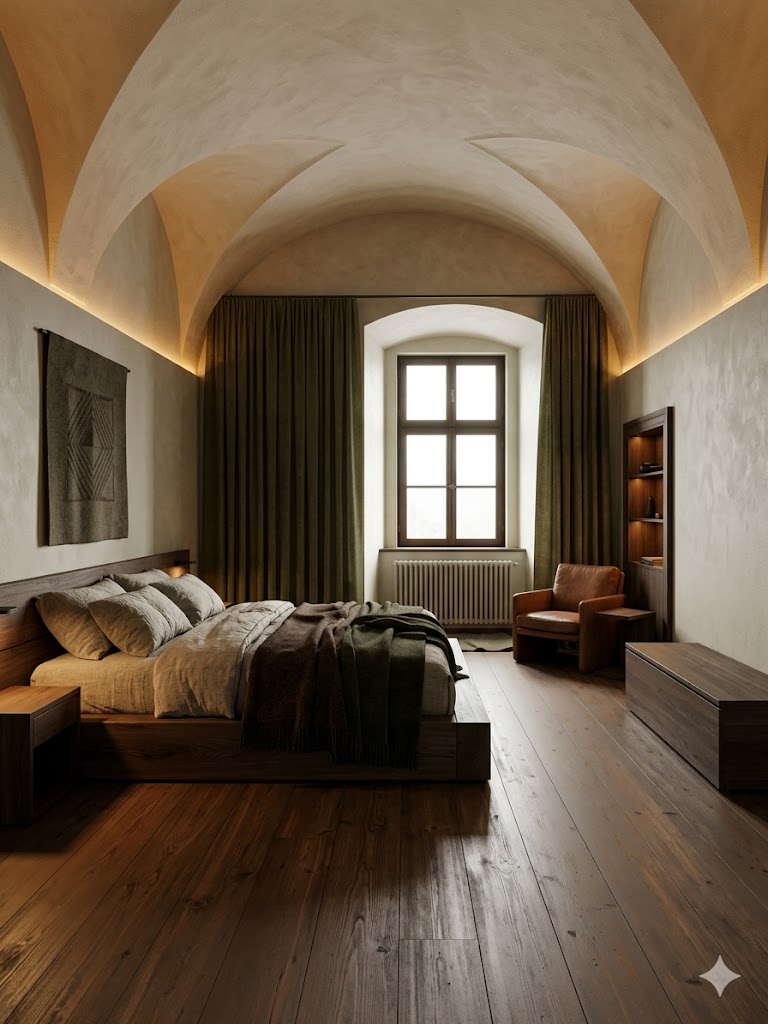
The apartment’s principal chamber now functions as a secluded reading room — less a conventional living area than an intellectual refuge embedded within the former infirmary of the abbey. Pale vaulted ceilings rise above restrained oak shelving, heavy textiles and pools of warm indirect light designed to soften the immense Gothic volume during the long alpine winters.

Rather than competing with the architecture, the furnishings intentionally recede into it. Deep textiles, aged timber and tactile natural surfaces create an atmosphere closer to an old monastic archive than a contemporary interior project. The room feels psychologically protective: silent, warm and spatially calm.

The result is neither minimalism nor historical reconstruction, but a lived atmosphere shaped by continuity, restraint and the peculiar stillness of the monastery itself.
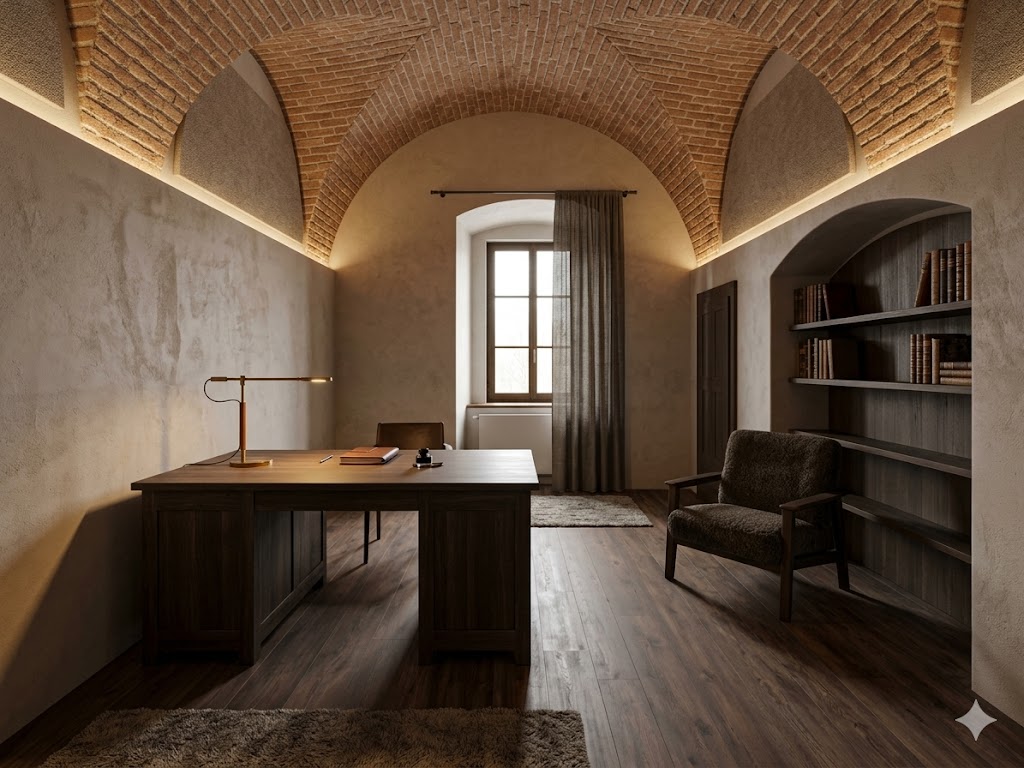
The vaulted reading chamber transforms the former infirmary into a secluded alpine library shaped by silence, warm timber and restrained natural materials.
“In the late seventeenth century, Abbot Leopold Fölsch reportedly exhausted large parts of the abbey treasury pursuing alchemical experiments — a financial collapse that inadvertently preserved Neuberg’s Gothic architecture from later Baroque modernization.” Based on regional historical accounts
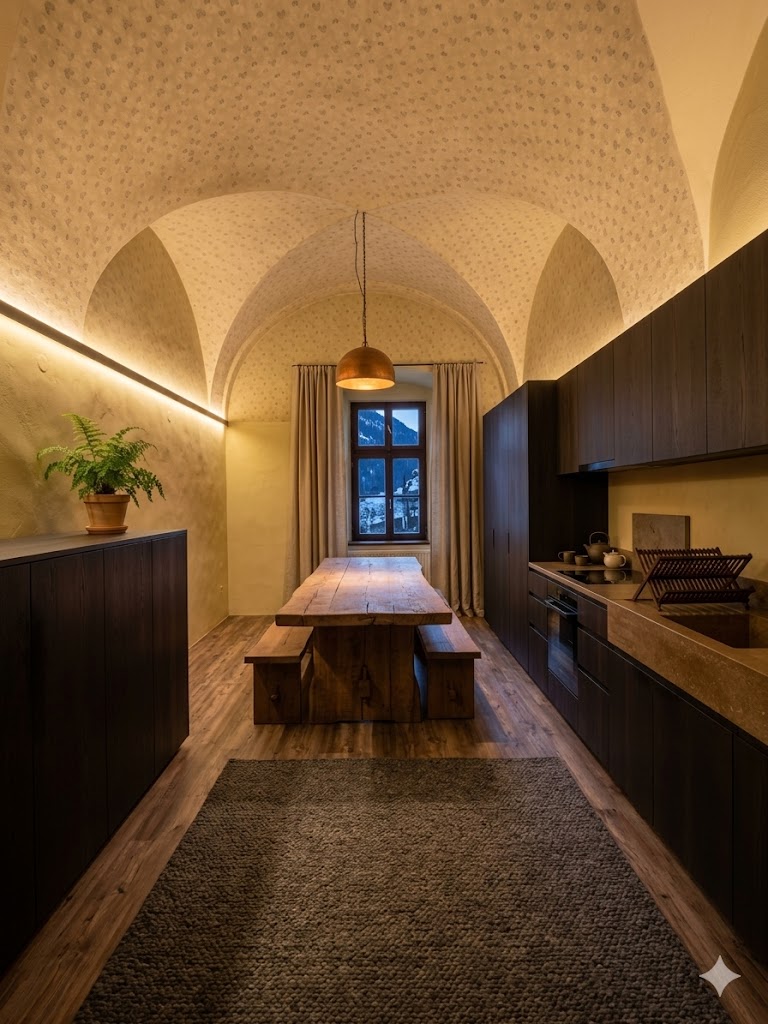
The kitchen was conceived less as a contemporary culinary space and more as a communal winter room centered around warmth, tea and conversation.

A kitchen shaped by restraint

Rather than replacing the existing architecture entirely, the kitchen embraces the philosophy of minimal intervention. Dark oak cabinetry introduces visual gravity against the pale vaulted shell while the communal table reinforces the monastic rhythm of gathering, reading and slow meals during winter months.

Warm indirect lighting traces the geometry of the Gothic ceiling without turning the room theatrical. Open shelving preserves an atmosphere of lived practicality while muted stone surfaces avoid the sterile perfection often associated with contemporary minimalism.

The resulting atmosphere feels deeply human — closer to an old alpine rectory than a polished architectural statement.

The monastic bedroom

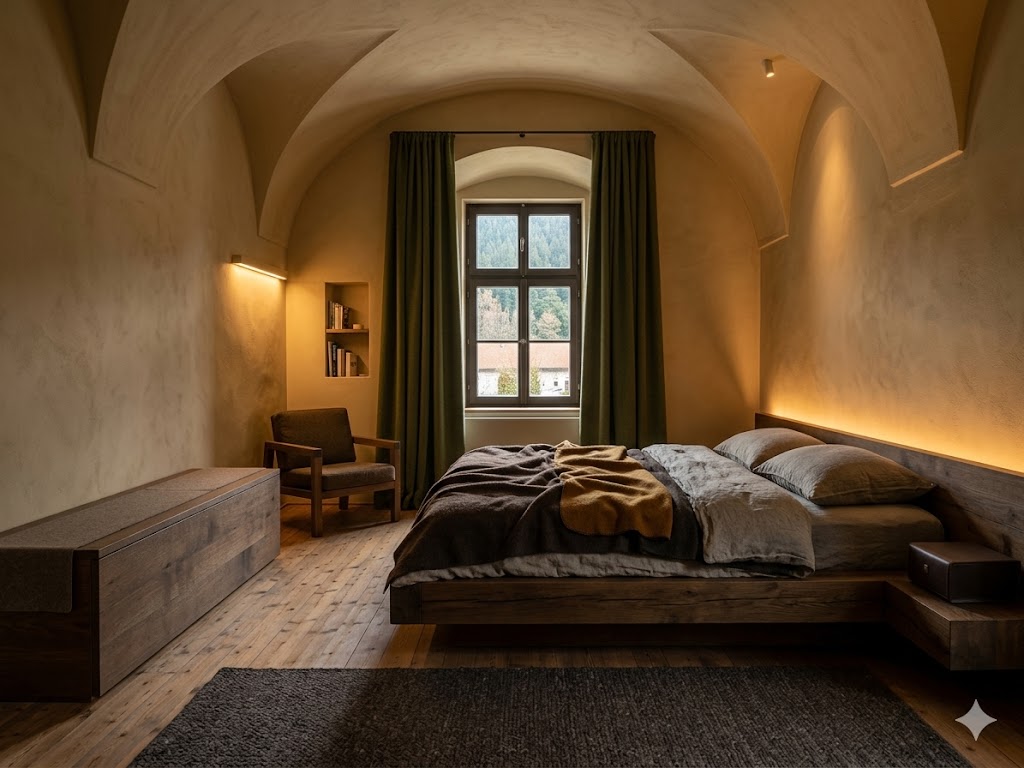
The bedroom remains intentionally sparse, allowing the proportions of the vaulted architecture to define the emotional atmosphere of the room. Low timber furniture reinforces a sense of horizontal calm beneath the vertical rhythm of the Gothic ceiling.

Heavy linen curtains soften both sound and winter cold while concealed warm lighting transforms the pale plaster walls into reflective amber surfaces after dusk. The room avoids both hotel luxury and monastic severity — landing somewhere between alpine retreat and contemplative refuge.

Even the material palette feels intentionally restrained: untreated oak, softened textiles, brushed metals and pale lime plaster designed to age naturally rather than impress immediately.

Warm indirect lighting and restrained natural materials create a psychologically protective winter atmosphere beneath the preserved Gothic vaults.
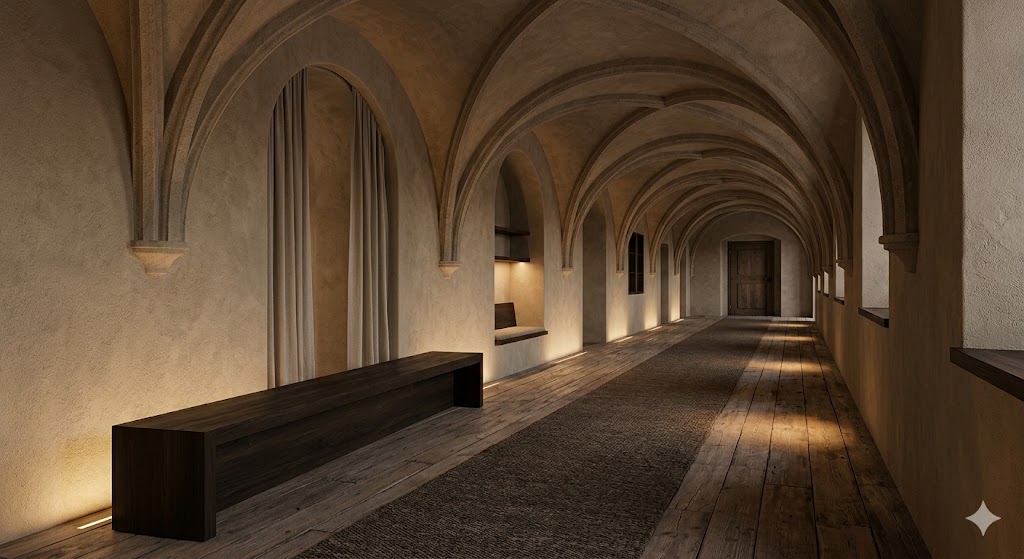
The guest chamber preserves the quiet proportions of the original infirmary rooms while introducing softened contemporary warmth.

The hidden chamber

The guest room may be the apartment’s most intimate space. Narrower and quieter than the principal chamber, it embraces the psychological comfort of enclosure — a room intended for retreat, reading and long periods of winter silence.

Warm oak surfaces, softened linen textiles and carefully restrained illumination allow the Gothic vaults to remain visually dominant while avoiding the darkness often associated with historic interiors.

Throughout the apartment, the project resists aggressive modernization. Instead, the architecture itself becomes the luxury: silence, proportion, material warmth and the sensation of inhabiting a place suspended outside ordinary time.

The thermal refuge

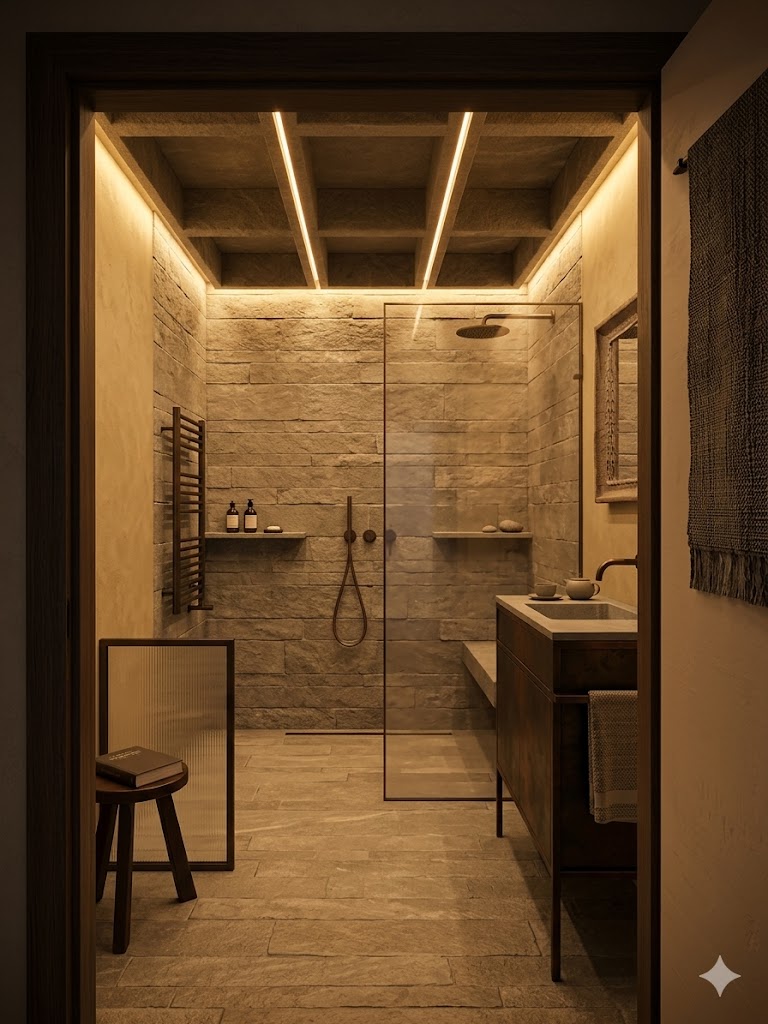
The bathroom departs slightly from the untouched monastic shell of the remaining apartment. Because the original space suffered from severe thermal inefficiency, the ceiling was historically lowered — creating a more intimate atmosphere suited to warmth and recovery during alpine winters.

Natural stone textures, matte fixtures and concealed lighting avoid the language of luxury spa culture. Instead, the room feels grounded, tactile and deeply protective — closer to a private thermal chamber than a contemporary designer bathroom.

The walk-in shower remains intentionally restrained, emphasizing silence and materiality rather than spectacle. Warm surfaces, indirect light and softened acoustics transform the room into a place of physical retreat during the coldest months of the year.

Natural stone surfaces and restrained warm lighting create an atmosphere of silence, recovery and alpine winter shelter.